
Controlling the Narrative: Body Camera Video in the Age of Instant Outrage
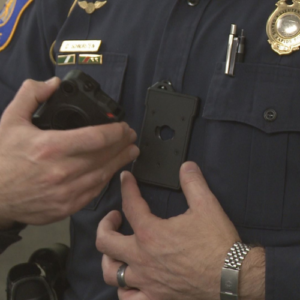 Image: WZZM13
“Release the video now!” has become less of a request and more of a demand. And too often, it is a demand driven not by a pursuit of truth, but by a desire to control the narrative before the facts are known. In today’s environment, incidents involving law enforcement are not investigated first; they are tried in the court of public opinion within minutes. A grainy clip, a partial recording, or a selectively edited video hits social media, and the verdict follows shortly after. The media amplifies it. Commentators dissect it. And before a single report is completed, the conclusion is already written.
Then comes the pressure campaign. Release the body camera. This is a manufactured urgency. The push for immediate release is framed as transparency. In reality, it is often about speed over accuracy. Media outlets know exactly what they are doing. The longer they can drive a narrative without contradiction, the more it solidifies in the public’s mind. By the time full video or investigative findings are available, the damage is already done. The truth is no longer competing with uncertainty. It is competing with a fully formed, emotionally charged storyline and in that fight, the truth rarely starts on equal footing.
Body camera footage is powerful, but it is also limited. It does not capture what the officer sees in full. It does not reflect depth, peripheral vision, or the physiological effects of stress. It compresses time and distorts perception. Yet once released, it is treated as definitive. Clips are slowed. Frames are frozen. Decisions made in fractions of a second are judged over hours of commentary. Individuals with no training and no accountability offer conclusions with absolute certainty. That is not analysis. That is narrative building. Once that narrative takes hold, it is nearly impossible to reverse.
Rushing to release body camera video does not just risk confusion. It actively undermines the integrity of the process. Witnesses are influenced by what they see online. Statements begin to mirror video rather than memory. Officers are placed in a position where their rights are jeopardized, including protections recognized under Garrity rights. Investigations are forced to operate in a public environment where every step is second-guessed in real time. Through it all, one thing is consistently overlooked. The officer at the center of the incident is entitled to the same fairness as anyone else. That fairness disappears when the process is hijacked by public pressure.
Law enforcement has been losing the narrative battle not because the facts are lacking, but because the response is reactive. Departments wait. The media fills the silence. Then, under pressure, video is released without context in an attempt to catch up. By then, it is too late.
If video is going to be released early, it must be done on law enforcement’s terms, not in response to outrage cycles. It must include clear, factual explanation. It must be timed in a way that does not compromise the investigation or the rights of those involved.
Just as importantly, departments must be willing to say no. No to premature release. No to incomplete information. No to allowing the loudest voices to dictate the timeline. That requires coordination, discipline, and support from organizations like the Fraternal Order of Police, which play a critical role in protecting officers when these decisions are being made.
This is not a debate about transparency. It is a fight over who controls the story. Release body camera video when it strengthens the truth and can be explained with context. Hold it when release would distort the facts, compromise the investigation, or feed a narrative that has already outrun reality. Once the narrative is set, facts alone are rarely enough to undo it.
When law enforcement allows others to define the story, the outcome is predictable. The officer is judged before the investigation is complete. The public is misinformed. The truth is left trying to catch up to a version of events that was never accurate to begin with.
That is not transparency. That is surrender.

